Black and White Decorative Borders: Graphics for Creative Design
As a graphic designer with years of experience in branding, packaging, and digital product design, I always look for versatile assets that can elevate a project without overpowering it. Black and White Decorative Borders is one such graphic design asset that offers a clean, timeless aesthetic ideal for a range of creative design applications.
The First Impression: A Timeless Visual Mood
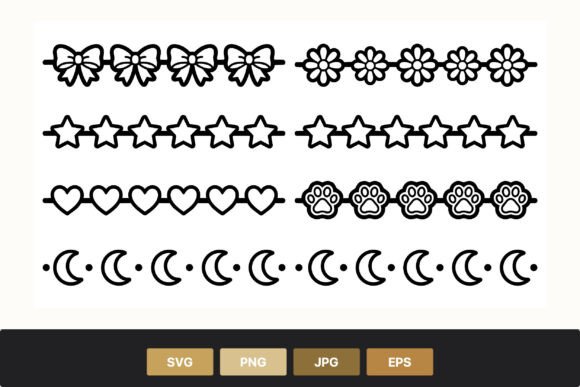
Upon first glance, Black and White Decorative Borders feels like a classic illustration with a modern edge. The line art style, featuring horizontal borders with bows, flowers, stars, hearts, paw prints, and moons, creates a soft yet structured visual mood. This design works well for projects that aim for a nostalgic, artisanal, or whimsical feel—perfect for handmade businesses, seasonal campaigns, or boutique product lines.
The black and white vector illustration has a minimalist quality that allows it to blend seamlessly into various design directions. It doesn’t demand attention but adds subtle sophistication when used thoughtfully.
Real-World Use: Where It Shines in Design Projects
In real design situations, Black and White Decorative Borders proves its versatility. It’s an excellent choice for logo design, especially when paired with a clean font. The border can serve as a framing element, adding depth and character without overshadowing the main brand mark.
For brand identity, this asset can be used as a recurring motif across marketing visuals, packaging design, and social media graphics. Its repeating pattern makes it ideal for t-shirt design, mug art, and tote bag prints, where consistency is key.
When working on editorial design or blog visuals, the decorative elements add a touch of elegance. They also work well in Canva templates and Cricut projects, offering a ready-to-use design that can be customized for different purposes.
Best Uses: Enhancing Visual Appeal Without Overcomplicating
Black and White Decorative Borders excels in large layout areas, hero graphics, and product mockups. It can act as a decorative accent in themed collections, campaign visuals, or printable wall art. Its simplicity allows it to stand out in commercial design without clashing with other elements.
This design asset is particularly useful for printable designs, such as stickers, greeting cards, or downloadable artwork. It also supports sublimation design, making it a valuable addition to a design bundle for print-on-demand sellers or Etsy products.
Cautions: When to Avoid or Limit Use
While Black and White Decorative Borders is visually appealing, it may not be the best choice for every project. In small sizes, the details can become lost, and in crowded layouts, it might overwhelm the composition. It’s also not ideal for minimalist branding or professional corporate materials where clarity and simplicity are prioritized.
When placed on complex backgrounds or low-contrast designs, the border may lose its impact. It’s important to test it on different surfaces and ensure it maintains visibility and readability in all contexts.
Impact on Design Quality: Readability, Hierarchy, and Brand Consistency
One of the most significant benefits of Black and White Decorative Borders is its ability to enhance visual hierarchy without disrupting it. When used as a supporting element, it helps guide the viewer’s eye while maintaining a polished look.
For small business branding, this asset can add a layer of professionalism and emotional appeal. It builds visual trust by reinforcing the brand’s identity through consistent design elements. Whether used in web design, social media posts, or packaging design, it contributes to a cohesive and recognizable brand presence.
Practical Designer Notes: What to Check Before Using
Before incorporating Black and White Decorative Borders into a client project, there are several practical steps to take. Test it in black and white to ensure it works across different mediums. Check contrast on both light and dark backgrounds to avoid visibility issues.
Preview it at small and large sizes to confirm it scales well. Place it on real mockups to see how it interacts with other design elements. If it includes PNG transparency, inspect it for clean edges. For SVG design, verify that it’s editable and scalable without loss of quality.
Compare it with different font styles—serif, sans serif, script, or display fonts—to ensure it complements the overall typography. Always confirm the commercial license before using it for a client or business project.
Conclusion: A Valuable Addition to Any Design Toolkit
Black and White Decorative Borders is more than just a decorative element—it’s a functional graphic design asset that can elevate a wide range of projects. Whether you’re working on a handmade business, a seasonal campaign, or a digital product, this illustration offers flexibility, style, and practicality.
For designers looking to add a touch of elegance to their work, this asset is worth considering. It fits naturally into creative design workflows, supports multiple applications, and provides a reliable foundation for both digital and physical outputs.